
When You Want Answers About Your Biological Family, The Internet Can Turn Into A Dead End Fast
If you’re trying to your locate biological parents or family members, you’ve probably already felt the emotional whiplash: one “possible match,” one promising name, and then… nothing that actually confirms what’s true. Add sealed adoption records, name changes, or incomplete DNA results, and it starts to feel like your search is stuck in permanent “almost.”
This is exactly where hiring a private investigator to find your biological parents can help by turning a scattered, stressful search into a lawful, step-by-step process that focuses on verification first. Below are the three most common topics we get when we are hired to investigate the location of someone’s biological parents or family.
Why Sealed Adoption Records Stop Most People In Their Tracks
In South Carolina, adoption-related access rules can be restrictive, and in many cases you may need consent or a court process to inspect or access certain sealed materials. State guidance makes clear that, when biological parents are unknown, access to an original birth certificate may require a court order and even then, access may be limited to inspection rather than receiving a copy.
That’s the moment most people spiral into forums, conflicting advice, and misinformation loops. Hiring a private investigator to find biological parents doesn’t replace legal processes, but they do help you avoid wasting months chasing paths that won’t produce verifiable results.
How A Private Investigator Helps When Records Are Restricted
When records are sealed or redacted, the job becomes building a fact-based profile from lawful sources, then cross-checking identity until the story holds up. In practical terms, sealed records often mean you need a documentation strategy: consistent names, date ranges, and locations that can be verified across multiple sources.
South Carolina agencies also note important limitations, like DSS being able to provide finalized adoption records in some foster-care adoptions (age and eligibility dependent), but not original birth certificates, and redactions may apply.
Hiring a private investigator to locate your biological parents helps by:
- Identifying which details matter most to move the search forward (and which details are noise).
- Avoiding common dead ends (same-name confusion, outdated addresses, “tree” errors, unverified social posts).
- Building a defensible identity picture using lawfully accessible records, timelines, and relationship linkages.
If you’re feeling stuck here, the value of hiring a private investigator to find your biological parents is clarity: what can be proven, what can’t (yet), and what the next lawful step actually is.
If you only have two or three facts, don’t assume it’s hopeless. It often means the strategy changes from “direct match” or trying to jump straight to a single person to “build the profile” and creating a verified foundation first.
Most People Hire A Private Investigator Because They Have Zero Information On Their Biological Parents
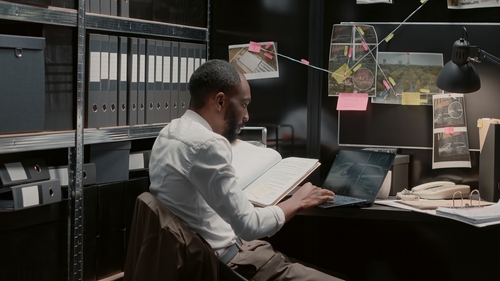
A surprising number of family-location cases begin with almost nothing: a first name, a rumor, a state, a rough age range, or a decades-old story that may not be accurate. This is where hiring a private investigator to find your biological parents can often make real progress, because the process isn’t “guess and hope.”
It’s structured. Think of it as: locate → verify → decide what comes next. That middle step of verification is what keeps people from contacting the wrong person or building an entire emotional story around the wrong lead.
How Investigators Build Leads On Location From Limited Details
Even with minimal starting information, partnering with a private investigator to find your biological parents or family can still produce real momentum, because the process isn’t built around “one perfect clue.” It’s built around small, verifiable details that can be connected into a reliable identity path.
When you only have a name fragment, a city, a rough age range, or a story that may be incomplete, the investigation usually shifts into profile-building mode: constructing the most accurate possible picture of a person’s life over time, then narrowing until one candidate fits the facts.
A private investigator can “grow” a case using lawful methods such as:
- Historical addresses and household associations
Who lived with whom, when, and where. This can reveal family clusters, prior surnames, relationship ties, or repeated geographic patterns. Even one old town or neighborhood can be enough to start mapping likely connections. - Public-record linkages (when lawfully accessible)
The strongest leads often come from connections—not just names. Records can help identify consistent threads like age ranges, prior locations, associated individuals, or name variations that match a timeline. - Verified contact networks and identity confirmation steps
Once a likely identity is developed, the next phase is verification—confirming the person is the right person before any outreach. This often includes checking multiple sources to make sure the details align and the conclusion isn’t based on a single “lucky guess.”
This isn’t about finding someone on social media and hoping the profile is accurate. It’s about connecting dots carefully, then pressure-testing the result.
DNA Results Leave You With More Questions Than Answers
DNA platforms can be incredibly powerful, but they’re not designed to give you a simple “here’s your biological parent” answer. They give you data shared DNA amounts, predicted relationships, surnames that may or may not matter, and location hints that are often broad.
That’s why so many people walk away from their results feeling like they’ve gained information but lost clarity. A match list doesn’t automatically translate into a real-world identity, a confirmed family line, or a safe next step. The hardest part is that DNA results can look definitive when they aren’t.
Shared cM numbers can suggest multiple possible relationships, and “close-ish” matches can create a false sense of certainty. Add in common surnames, private family trees, incomplete profiles, or users who never log in again, and you’re left with fragments that can’t be trusted on their own.
Many people end up staring at a cluster of matches thinking, “I’m right there,” but the truth is they’re often still missing the one thing that matters most: verification.
How A Private Investigator Turns DNA Clues Into Real-World Leads
The goal isn’t to “force” a reunion. The goal is to confirm the correct identity and give you control over what happens next. That’s also where emotions can quietly hijack the process. When you want answers, it’s natural to grab onto the most promising name, the closest match, or the family tree that seems to fit your story.
But DNA searches are full of lookalikes, people with similar names, overlapping regions, and family lines that appear connected until you test the timeline. Without a method for sorting what’s probable from what’s merely possible, it’s easy to spend weeks building a narrative that collapses the moment one detail doesn’t match.
In many cases, the best outcome is simply reaching a point where you know what’s true. Hiring a private investigator to find your biological parents can help you:
- Organize matches into likely family clusters (maternal vs. paternal patterns).
- Translate partial data into usable leads (who fits the timeline, region, and relationship network).
- Focus on verification before any outreach (so you don’t contact the wrong person).
A private investigator can help by slowing the process down and putting structure around it. Instead of jumping from match to match, the investigation focuses on organizing your results into workable biological family clusters, translating DNA clues into real-world leads, and most importantly, confirming identity before you take any action.
The point isn’t to remove the human side of the search; it’s to protect it.
What You Should Gather Before Hiring A Private Investigator
If you’re considering a private investigator to find your biological family, the best way to protect your time and keep costs focused on real progress, is to gather anything you can verify, even if it feels small or incomplete. Most people assume they need a full name and a perfect paper trail to begin.
In reality, what matters most is having a few facts that can be confirmed and used as anchors. The more confirmed details you provide up front, the less time your investigator has to spend separating signal from noise, untangling rumors, or chasing leads that don’t hold up.
Details that feel random can also be incredibly useful when they’re specific enough for your PI to cross-check. If you’ve heard anything about schools, workplaces, military service, churches, or community groups that your biological parents attended, those clues can help a private investigator build a profile that’s consistent across a timeline.
Documentation That Can Speed Up Locating Your Biological Family
If you have any adoption agency details or paperwork from your biological parents that you legally possess like letters, non-identifying information, case references, dates, or summaries, bring it, even if you think it’s outdated.
If you’ve done DNA testing, save screenshots or notes from the platforms you’re using: match lists, shared cM amounts, surnames that repeat, and locations that show up across multiple matches. Those pieces don’t confirm identity on their own, but they can guide a verification strategy when used carefully.
- Any legal names (even if you’re not sure they’re current).
- Approximate DOB or age range.
- Last known city/state and time period.
- Schools, workplaces, military service, churches, or clubs (if known).
- Any adoption agency details or paperwork you legally possess.
- Screenshots/notes from DNA platforms (matches, shared cM, surnames, locations).
Even if you only have two or three items, a private investigator can often build from there because the process to find your biological family is cumulative. The investigative search doesn’t rely on one “magic” clue, it relies on stacking small verified facts until a single identity becomes the only one that fits.
The more you can provide to your PI at the start, the faster your investigator can move from uncertainty to confirmation regarding the location of your biological parents, and the sooner you can decide what you want the outcome to be, verified information only, a discreet contact plan, or simply clarity you can trust.
Frequently Asked Questions For A Private Investigator
Can a private investigator help if adoption records are sealed?
Often, yes. Especially by building lawful alternative lead pathways, verifying identity, and helping you avoid dead ends. South Carolina rules commonly involve consent or court processes for accessing sealed records, and access may be limited depending on the situation.
What if the person doesn’t want to be found?
A private investigator looking for biological parents can still work toward verified information, but responsible investigators handle contact carefully and respect boundaries. In some cases, “verified identity” is the goal; in others, you may choose a discreet outreach plan you control.
Will a PI contact my biological parent for me?
Some will, if that’s what you want and it can be done responsibly. Many people prefer: verify first, then decide how (or whether) to reach out. A private investigator should never push you into contact before you’re ready.
Is this the same as “missing persons” work?
It can overlap. Many family-location cases use the same core tools as missing persons investigations, especially skip tracing and identity verification. That’s why a private investigator often starts with the same fundamentals used to locate hard-to-find individuals.
When You’re Ready To Find Your Biological Parents Choose A Private Investigator That Cares
The difference when you work with a private investigator to find your biological parents is that the search becomes structured, lawful, and grounded in verification. Instead of chasing every possibility, you get a process that focuses on what can be biologically proven.
If you’re searching in Upstate South Carolina and want an investigator who emphasizes professionalism, ethical investigations, and fact-based results, Upstate Private Investigators is positioned to help. These family cases require discretion and care. They require someone who understands that “finding answers” isn’t a transaction, it’s a turning point.
If you’re ready to start with the most direct route to locating and confirming your biological family, contact Upstate Private Investigators for a consultation.
We’ll walk through what you know, identify what’s actually useful, and map out a realistic path forward, so you can stop living in uncertainty and start moving toward answers with confidence
