
The Personal and Legal Risks of DIY Surveillance Are Not Worth It
Many people consider watching someone themselves when the stakes are high. A parent in a child custody dispute may worry about the other parent’s behavior. A spouse may suspect adultery. A business owner may question whether an employee is faking an injury or stealing from the company.
Watching and following may seem like a way to get answers. In reality, DIY surveillance can put your safety at risk, alert the person you are watching, and expose you to criminal charges or civil lawsuits. It can also produce evidence that a judge will not allow in court.
Upstate Private Investigators helps clients throughout Greenville, Anderson, and surrounding areas of Upstate South Carolina with lawful, discreet surveillance services that protect your case and your peace of mind.
Following Someone Can Put You in Danger
Following someone is more dangerous than it looks on television. If the person you are watching realizes what is happening, the situation can turn into an angry confrontation in a parking lot, at a home, or on the side of the road. People who feel threatened sometimes react with violence, and a spouse or partner who is already hiding something may respond unpredictably when caught off guard.
DIY surveillance also creates driving hazards. Trying to keep a car in sight while watching traffic, reading signs, and taking photos at the same time is a recipe for an accident. Long hours parked in unfamiliar neighborhoods can leave you exposed, especially at night.
Emotional involvement adds another layer of risk. When you are personally invested, it is hard to stay calm, make good decisions, and walk away when a situation becomes unsafe. Professional private investigators are trained to recognize these warning signs.
DIY Surveillance Can Raise Suspicion
Most people are more observant than you think, especially when they have something to hide. A familiar car parked down the street twice in one week, a person who shows up at the same restaurant, or a new app on a shared phone can all give you away.
Once the target notices DIY surveillance, the case often falls apart. They may delete text messages, clear browser history, move money, or stop visiting certain places. They may change their routines, take different routes, or ask friends to cover for them.
In a custody or divorce case, they may even use your actions against you by claiming you are stalking or harassing them. After suspicion is raised, it becomes much harder for anyone, including a professional, to gather useful, reliable evidence.

Inadmissible or Weak Evidence Without a Trained Investigator
Even if DIY surveillance uncovers the truth, the evidence may never help your case. Courts have rules about how evidence is gathered, handled, and presented.
Courts May Exclude Evidence From DIY Surveillance
Courts can throw out illegally obtained proof, such as secretly recorded conversations or messages taken from a hacked account. If you cannot explain how the evidence was collected and stored, the other side’s attorney may argue that it was altered or taken out of context. This is known as a chain of custody problem, and it can weaken otherwise strong evidence.
Regular People Struggle to Obtain Credible Proof
Regular people often struggle to collect the solid proof they need. Photos without dates, times, or locations are easy to challenge. Videos that are shaky, edited, or taken from a distance may not clearly show who is involved.
Your credibility is also on the line. Judges may view a spouse or former partner as biased, especially in emotional disputes like divorce or custody. A strong case requires careful, professional documentation rather than a few blurry photos from DIY surveillance. A licensed private investigator documents findings in detailed reports and can testify about what they observed.
Criminal Charges for DIY Surveillance in South Carolina
Good intentions do not protect you from the law. South Carolina and federal laws limit how people can watch, follow, record, and track others. Many people who try DIY surveillance do not realize they have crossed a legal line until they receive a court summons, a restraining order, or a call from law enforcement.
Stalking and Harassment Claims
DIY surveillance often involves repeatedly following someone, showing up where they work or live, or monitoring their movements. That can look like stalking. Under South Carolina law, harassment and stalking involve a pattern of conduct that would cause a reasonable person emotional distress or fear for their safety.
These charges can lead to fines, jail time, and a permanent criminal record. The person you are watching may also seek a restraining order against you. In a custody case, a stalking accusation can damage your credibility and hurt your chances of getting the outcome you want.
Wiretapping Violations
Recording phone calls or conversations is one of the most common DIY surveillance mistakes. South Carolina follows a one-party consent rule, which means you can generally record a conversation only if you take part in it or have a participant’s consent.
Hiding a recorder in someone’s car, placing a listening device in a room, or installing spyware on another person’s phone to capture calls, texts, or emails can violate both state and federal wiretapping laws. Violations can bring serious felony charges, prison time, and civil lawsuits for damages. Even married couples are not exempt from these laws.
Trespassing
Getting close enough to see or photograph someone often means stepping onto property you have no right to enter. Walking into a backyard, peering through windows, entering a gated community without permission, or going onto a workplace lot after being asked to leave can all lead to trespassing charges.
South Carolina also has separate laws against peeping and voyeurism that carry serious penalties. Placing a camera or tracking device on someone else’s property can create additional problems. A DIY surveillance effort that includes trespassing can turn you into the person facing legal trouble instead of the person seeking answers.
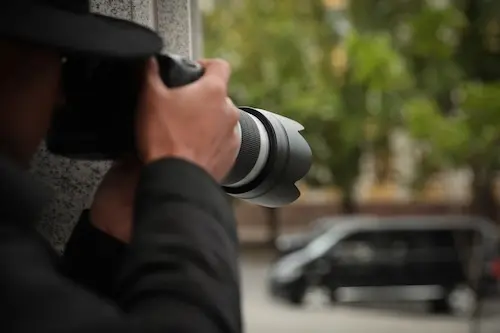
How a Private Investigator Conducts Surveillance Safely and Legally
Unlike DIY surveillance, hiring a private investigator replaces guesswork with a proven process. Instead of risking your safety, your reputation, and your case, you get a trained professional who knows the law and how to apply it in the field every day. At Upstate Private Investigators, we plan every assignment around your goals, gather facts lawfully, and deliver clear, organized results you can rely on.
Compliance With Privacy Laws and Licensed Investigators
Private investigation businesses in South Carolina must be licensed through the South Carolina Law Enforcement Division (SLED). Licensing involves background checks, insurance, and ongoing accountability to the state.
Licensed private investigators understand where they can legally stand, what they can record, and which tools are off limits. They know how state and federal privacy laws apply to photography, video, recordings, and public records.
This knowledge keeps the investigation within legal boundaries and protects evidence. When you hire a licensed private investigator, you reduce the risk of facing accusations of stalking, harassment, or invasion of privacy.
Methods Private Investigators Use to Gather Facts
Private investigators combine fieldwork with research, and the approach depends on your goals and the questions that need answers. Before surveillance begins, an investigator often reviews background information to learn likely locations, schedules, and vehicles.
Common methods include:
- Mobile and stationary surveillance from public places
- Time-stamped photos and video
- Background checks and public records research
- Review of public social media activity
- Witness interviews
- Asset searches using public records
An investigator organizes the facts into a detailed written report. That report can support conversations with your attorney, settlement negotiations, or court testimony.
Discretion and Confidentiality
Private matters deserve real privacy. Experienced private investigators know how to blend in, use unremarkable vehicles, and keep a safe, careful distance so the subject never realizes they are being watched. That discretion protects the integrity of the evidence and prevents the person from changing their behavior.
It also protects your personal relationships and reputation. At Upstate Private Investigators, we handle every case with strict confidentiality, from the first phone call to the final report.
Contact Upstate Private Investigators for a Free Consultation
If you are thinking about watching someone yourself, talk to a professional first. DIY surveillance can put your safety, your freedom, and your case at risk, while a licensed investigator can gather the facts lawfully and discreetly.
Upstate Private Investigators serves clients throughout Greenville, Anderson, and surrounding areas of Upstate South Carolina. Whether you are dealing with a custody dispute, suspected infidelity, or another sensitive matter, our team is ready to help. Contact us today or call (864) 940-3393 to schedule a free, confidential consultation.
